
Visarjan day with a house full of people: an hour-by-hour plan

Every year I forget, and every year the day reminds me: visarjan is not the quiet end of Ganpati. It is the busiest single day of the whole festival. The murti has been with you for days, the crowd has been thinning, you've started thinking the hard part is behind you — and then the last morning arrives and suddenly everyone who loves this Bappa wants to be in your house at the same time, because after this evening there is no more darshan to catch. I learned that the first year the way most of us learn things: standing in the doorway at eleven in the morning, aarti thali in one hand, phone buzzing in the other, wondering why I'd assumed the leaving day would be gentle.
This is written for the version of you who is still a few days out — picturing the procession, the dhol, the petals — and not yet picturing the twelve hours that come before the murti actually reaches the water. Because that stretch has a shape, and if you can see the shape now, the day stops ambushing you and becomes what it's meant to be: a proper, full-hearted goodbye instead of a scramble.
Why the leaving day behaves differently
Through the festival, footfall spreads on its own — a few neighbours one evening, cousins the next. If you paced that well, you already know the rhythm; I've written the choreography for it in the last Ganpati weekend, when everyone comes at once.
Visarjan day does not spread. It has a hard deadline built in — the murti leaves at a fixed hour, and everyone knows it. So three things collapse into one morning. The people who kept saying "aayenge, aayenge" realise this is genuinely the last chance. The close family who want to be there for the final aarti arrive early and stay. And the practical work — the naivedya, the packing of the platform, the actual carrying-down of a heavy murti — all lands in the same window as the crowd. Whether your Bappa leaves on the fifth day, the seventh, or on Anant Chaturdashi, the pattern is identical: a normal darshan day and a moving day, folded on top of each other.
The hour-by-hour shape
You don't need to run the day to the minute. You need to know, roughly, which hour holds which job — so the visitors don't arrive in the middle of the packing, and the packing doesn't eat into the goodbye. This is the shape I now hold in my head every year; slide the timings to match when your murti actually leaves.
| Rough hour | What it's really for | The host's one job |
|---|---|---|
| Early morning | The last shanti, before anyone comes | Final morning aarti, quietly, with just the household |
| Mid-morning | Close family and the "must see him once more" crowd | Prasad ready, chairs out — this is a darshan window, not packing time |
| Late morning | Naivedya and the vidai aarti | Cook or arrange the final bhog; keep the crowd fed and seated |
| Early afternoon | The lull before the move | Feed your own family; nobody moves a murti hungry |
| Mid-afternoon | Packing the platform, not the murti | Clear decorations, sort what's kept vs given away, keep the murti untouched till the muhurat |
| Late afternoon | The final aarti and the lifting | Everyone together for the aarti; then the men and the strong hands take position |
| Evening | The procession and the water | Walk, don't rush; someone stays back to hold the house |
The one line that saves the day is in that afternoon row: pack the platform, not the murti. Elders are firm about this, and rightly — the decorations, the backdrop, the lights come down early, but Bappa stays in place, garlanded, until the actual time to lift and carry. Do that and the move at the end is ten calm minutes, not a frantic half-hour.
The one message that gets everyone to the same aarti
The mistake I made that first year was assuming people knew when the final aarti was. They didn't. Half the building drifted in across the afternoon, missed the aarti entirely, and I spent the evening apologising. Now I send one message the night before — not a schedule, just the two moments that matter, so the people who want to be there for the goodbye actually make it.
Kal Bappa ki vidai hai 🙏 Subah se darshan khula hai. Antim aarti [time] baje, aur uske baad hum visarjan ke liye niklenge — jo saath chalna chahein, warmly welcome. Agar aap aa rahe ho toh ek message kar dena, taaki main prasad aur aarti theek se ready rakh sakun. Bappa ko saath mein vidai dena hai. ❤️ Ganpati Bappa Morya!
Two things that message does. It names the final aarti time, so nobody arrives to find it already over. And it asks for a heads-up, because the count on this day genuinely matters — you're arranging the last of the prasad, and you don't want to run short at the emotional peak of the whole festival. If keeping up with the prasad has been the running struggle, the two problems are the same problem, and I've worked through the restocking side of it in running low on prasad mid-Ganpati.
Where holding that count gets hard is when the replies are scattered across four WhatsApp groups and you're trying to remember who said they're coming for the aarti while also cooking the naivedya. Keeping every family's "haan, aa rahe hain" in one place, with a live number against the final aarti, is exactly the kind of multi-day home function Inyeet is built for — and if you'd like to see how that flow works before deciding, here's the whole thing. For a fifteen-person home Ganpati, a note on the fridge does the same job, and you should use that.
The part nobody plans for: coming home
Here is the hour the timeline can't hold. You get back from the water — feet aching, throat hoarse from "Morya", gulal still in your hair — and you walk into a room with an empty platform where Bappa was that morning. The first year, that quiet hit me harder than any of the crowd had. The flowers are still there. The rangoli is smudged. And the centre of the room, which has held your whole family's attention for days, is suddenly just a wooden stool.
Plan one small thing for that moment, because you won't have the will to invent it then: leave the lamp lit for a while, keep back a little of the morning's prasad, and let the house sit in it for ten minutes before anyone starts clearing. The clearing can wait for tomorrow — I've written about that specific midnight in what a house that has fed sixty people looks like at midnight. Tonight is not for cleaning. It's for letting the goodbye be a real one.
When visarjan is just a quiet vidai
If your Ganpati is small and close — your family, a couple of neighbours, one aarti and a short walk to the nearest immersion point — throw this whole plan away. A dozen people you love do not need an hour-by-hour table; they need you present, not managing a timeline. You'll do the aarti, carry Bappa down together, and come home to a quiet that feels tender rather than overwhelming, and that is exactly the festival at its best.
The plan earns its place only when your flat has been a ten-day open house and the leaving day threatens to fold the whole crowd, the cooking and the move into one impossible morning. If that's the visarjan you're heading toward, do the kind thing for your future self now: picture the shape of the day before it arrives, send the honest line the night before, and keep back a little prasad and a lit lamp for the moment you walk back in. Then the goodbye is a full one — tiring, yes, but the good kind of tired. Ganpati Bappa Morya. Pudhchya varshi lavkar ya.
Related reading
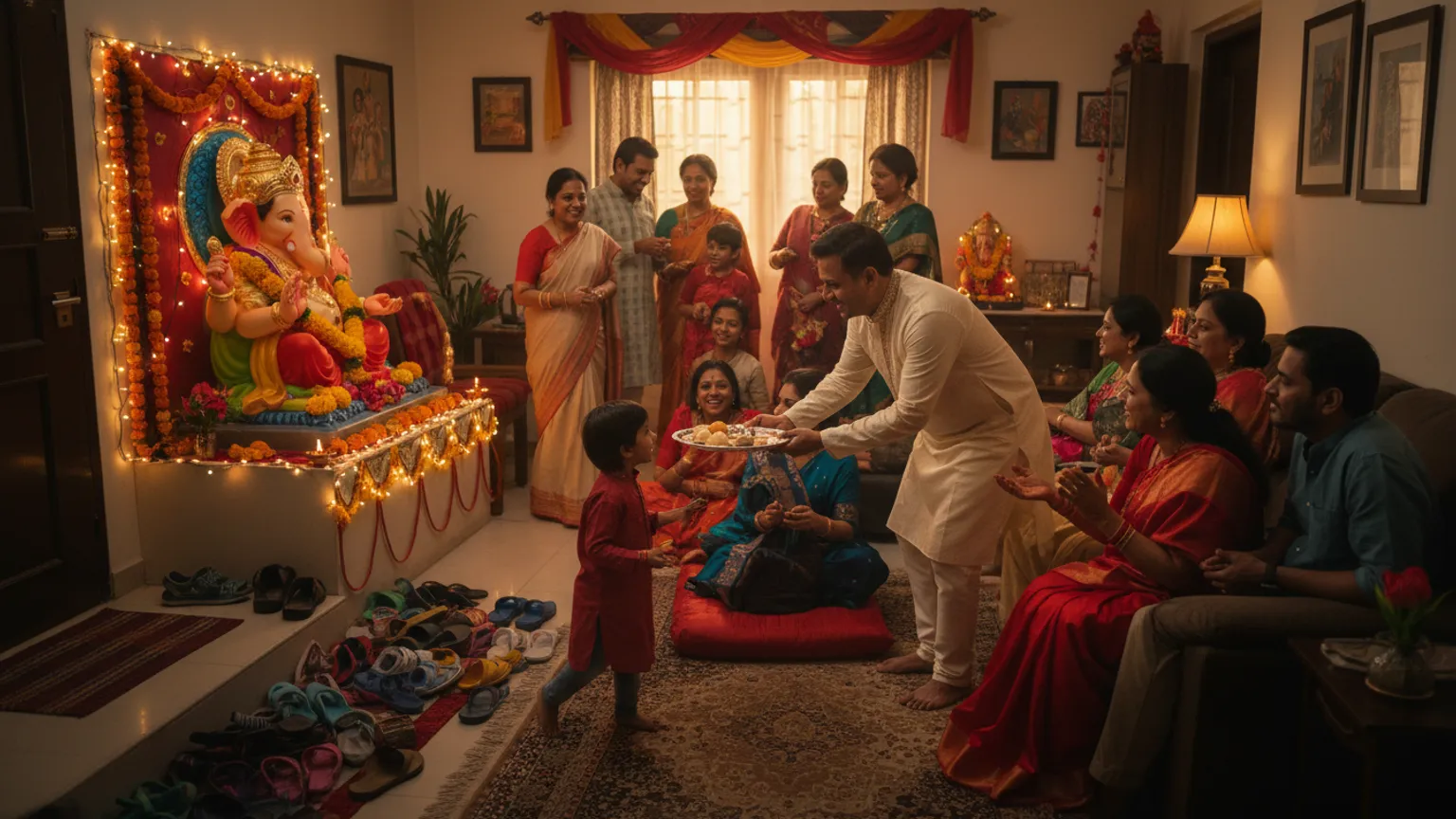
The last weekend of Ganpati, when everyone comes at once
The final Saturday and Sunday before visarjan is when ten days of 'aayenge, aayenge' arrives together. A host's plan for surviving the last-weekend surge.
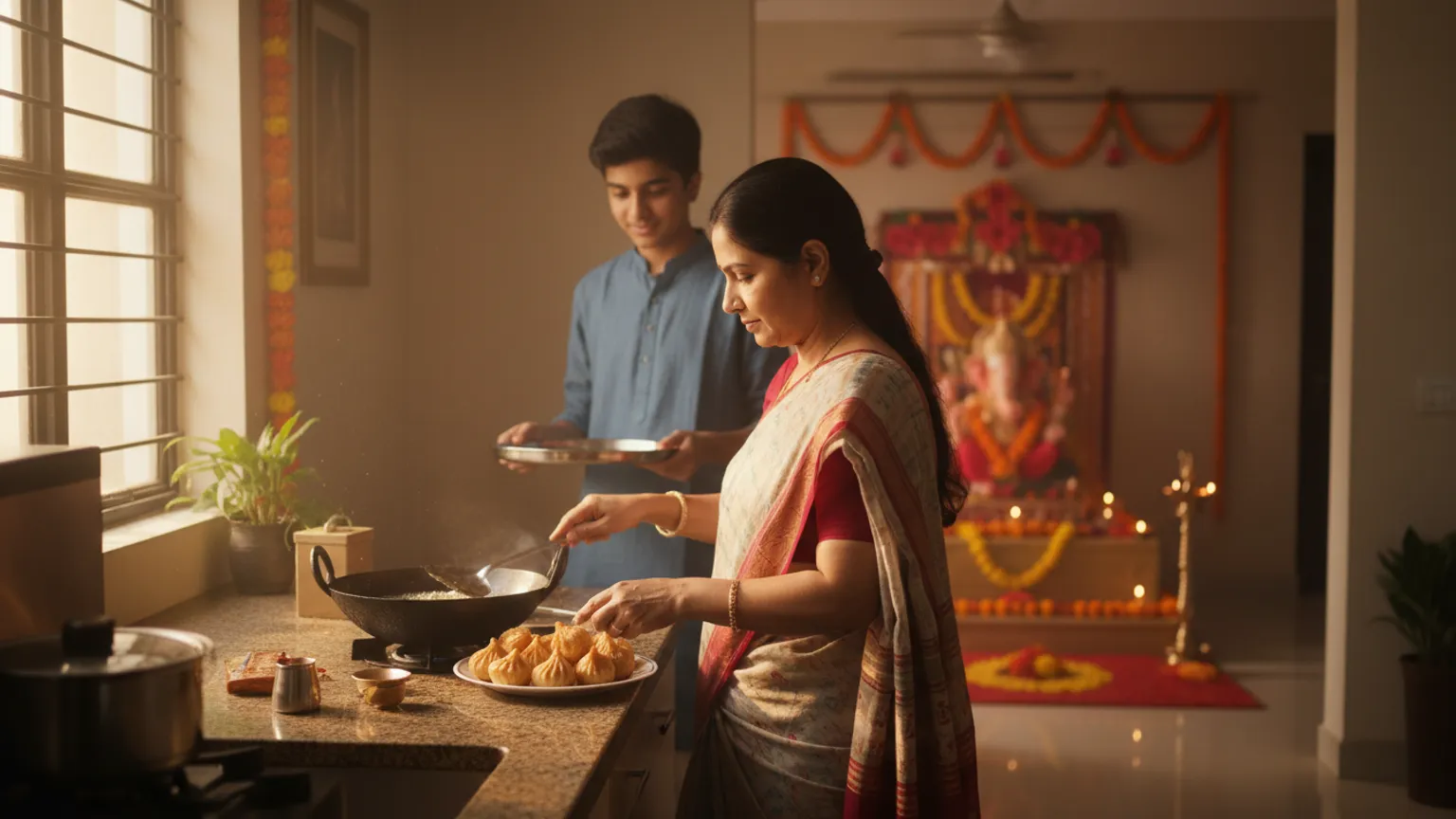
Running low on prasad mid-Ganpati: restocking without the panic
Mid-Ganpati the prasad tray runs low with guests still arriving. A host's calm plan to restock during the festival — what to keep in reserve, make or buy.
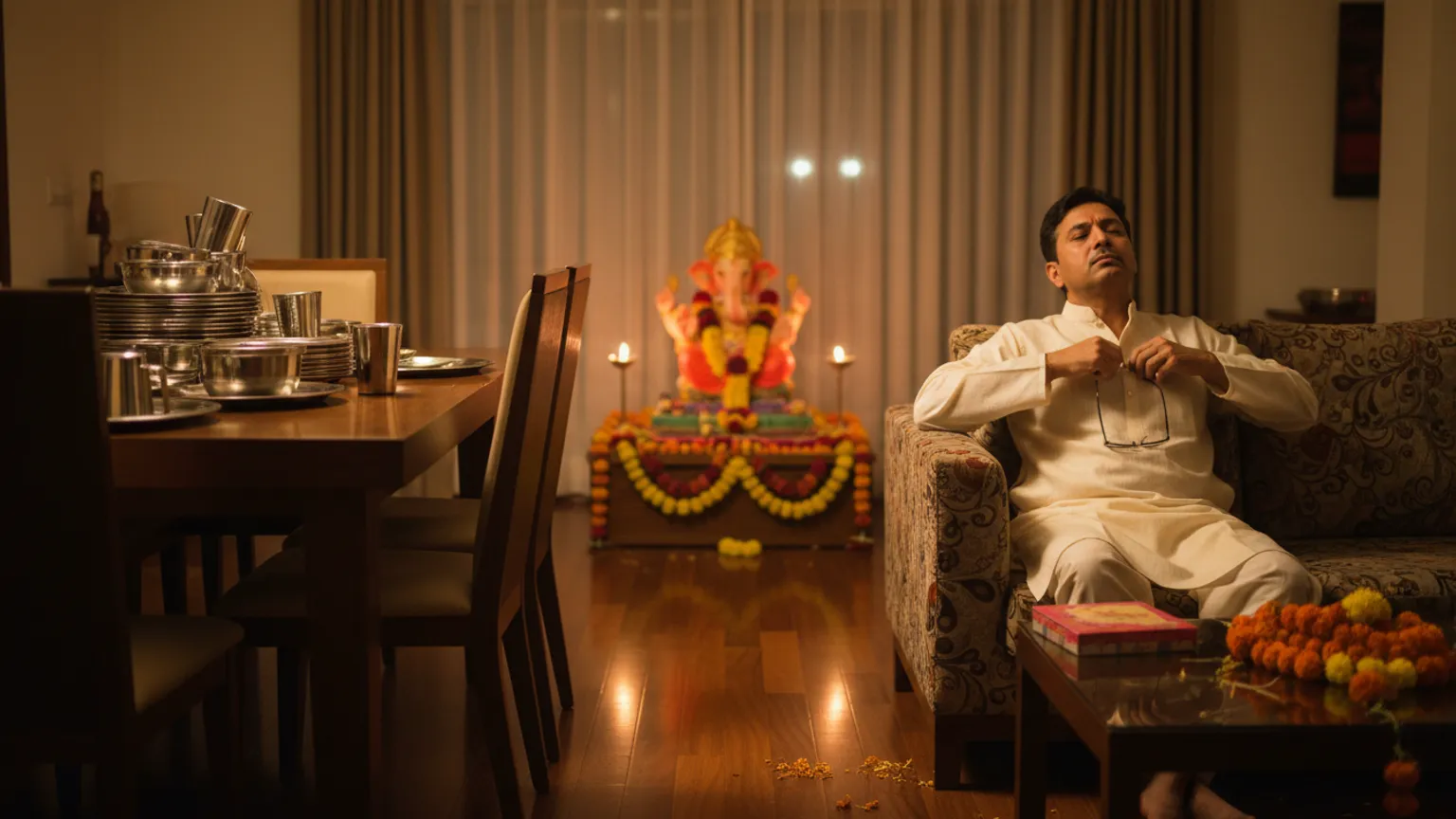
What a house that has fed sixty people looks like at midnight
The midnight after a big Ganpati darshan day, when sixty guests have come and gone. A host's plan for the reset, the leftover prasad and tomorrow's count.