
Hosting garba at home: space, sound and guest limits
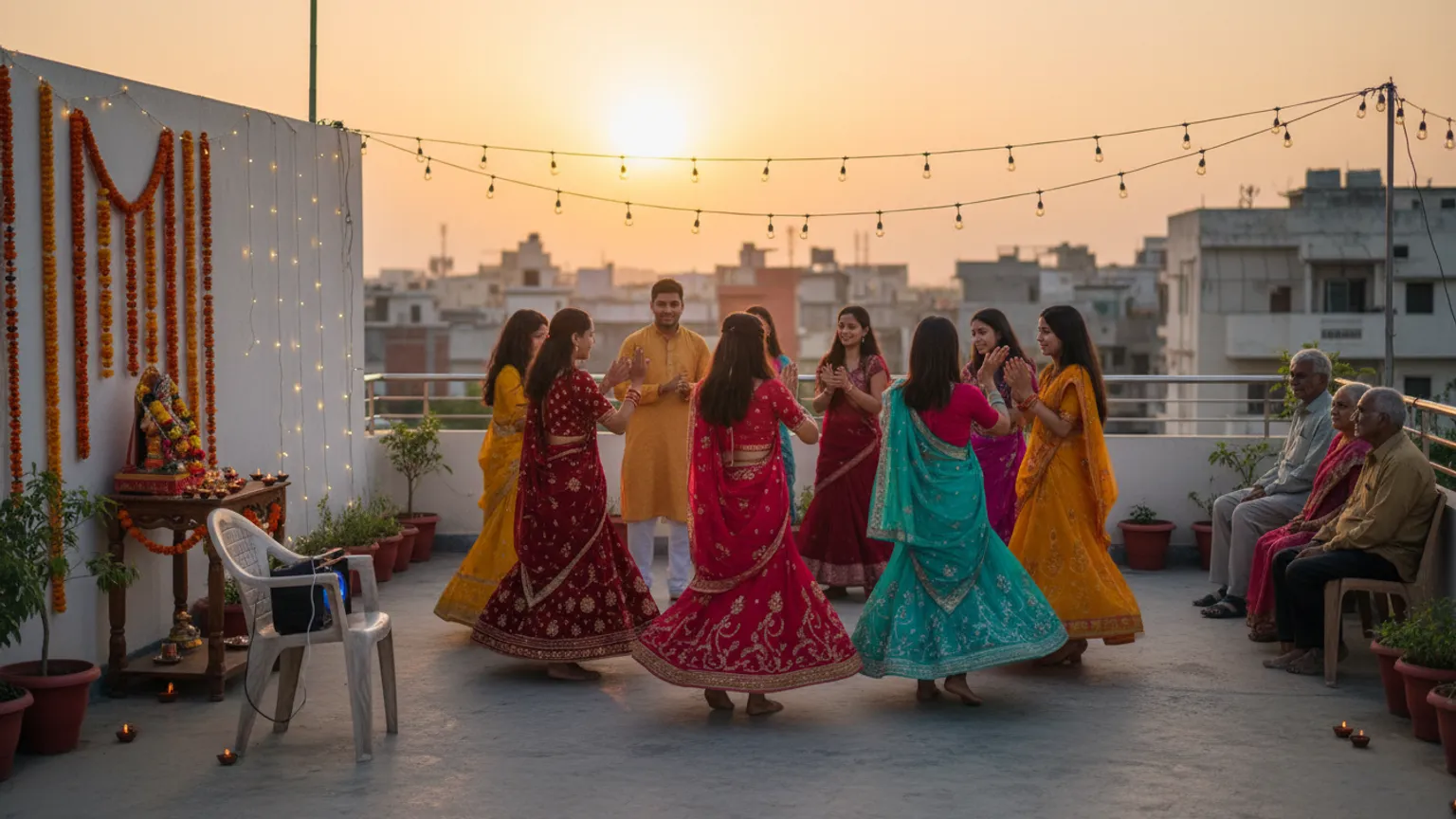
The first time I said yes to hosting garba, I said yes to the wrong number of people. It started as "chalo, thodi si garba karte hain" for our building's four or five families, and by the time the Saturday of Navratri arrived, my wife's cousins had invited their friends, my neighbour had told his gym group, and thirty-odd people turned up on a terrace that comfortably holds about twelve dancers. Nobody could actually twirl. The garba turned into a slow shuffle in a jam, two kids swinging dandiya sticks caught a poor uncle on the elbow, and at 10:45 the watchman came up to say Flat 301 had complained about the noise. It was a warm, happy evening — and it was badly planned, entirely by me.
That night taught me the one thing no decoration reel will tell you: garba at home is not a decoration problem, it is a floor-space and sound problem. Unlike a Ganpati darshan, where people arrive, fold hands and leave, garba needs people to move — to circle, to twirl, to swing sticks — which means clearance, and clearance is the constraint that quietly decides how many people you can really host. This is how I plan it now: how much space a garba circle actually eats, what the sound rules really are, and how to fix your guest number before the invite goes out instead of after the watchman knocks.
Garba space is measured in twirl radius, not floor area
The mistake I made was thinking about the terrace the way you think about a party — total square feet, minus a table, equals capacity. Garba doesn't work like that. A person doing garba with arms out and a spin needs a circle of clear floor around them, not just a spot to stand in. Dandiya raas needs even more, because a swung stick has a reach of its own and a collision hurts.
So the honest way to size a garba space is per moving dancer, with real clearance built in. Here is the rough guide I use now — treat it as "comfortable enough to actually dance", not "maximum you can cram":
| Space you have | Comfortable garba dancers | Dandiya pairs (needs more clearance) | Note |
|---|---|---|---|
| Small terrace / large balcony (~100 sq ft) | 4–6 | Skip sticks — too tight to be safe | One small circle, gentle steps only |
| Society parking bay / mid terrace (~300 sq ft) | 12–16 | 6–8 pairs | One good circle with room to spin |
| Large terrace / society open area (~600 sq ft) | 25–35 | 12–16 pairs | Two concentric circles start to work |
| Full society ground / hall (~1,000+ sq ft) | 45+ | 20+ pairs | A different game — you're running a venue |
Two things sit behind these numbers. First, a garba dancer needs roughly a 1.2–1.5 metre circle to themselves to twirl without clipping the next person — that clearance is the whole reason a room that "fits fifty for dinner" fits far fewer for garba. Second, dandiya needs more room than garba, because a stick adds close to an arm's length of swing on each side; if you're tight on space, keep it to garba steps and put the sticks away. There is no shame in a stick-free garba — it's safer with kids and elders in the circle anyway.
And notice the peak isn't the problem — the movement is. You can pack people onto a terrace to stand and chat. The moment they form a circle and start to spin, you find out how big your space truly is. Plan for the dancing, not the standing.
If your worry is the layout of the space itself — where the idol goes, where elders sit, how the crowd flows — the same principles I use for a home Ganpati apply almost directly here; I've written the full method in planning space for a stream of visitors. Garba just adds the extra rule that the middle must stay empty for the circle.
The sound rule most hosts learn the hard way
The noise complaint is the single most common way a home garba goes wrong, and it's the most avoidable. Here's what's actually true, minus the myths:
- The general rule in India is that loudspeakers and public-address systems are not permitted between 10 PM and 6 AM under the Noise Pollution (Regulation and Control) Rules. This is the default across residential areas.
- States can grant festival relaxations — a limited number of nights a year when the cutoff is extended, often to midnight, for occasions like Navratri. Whether your city has one this year, and until what time, is set by a local government or police notification, not by rumour on the society WhatsApp group.
- Your society's own rule can be stricter than the law, and it usually is. Many managing committees set an earlier cutoff — often 10 PM sharp, sometimes 9:30 — regardless of any state relaxation.
So the honest advice is: do not assume midnight, and do not assume the state relaxation covers you. Check your society's rule first, check the local police notification second, and plan your garba to end by whatever the earlier of the two is. I now plan our terrace garba to wind down the loud portion by 10 PM even on nights the city allows more — because the neighbour trying to put a toddler to sleep two floors down doesn't care about a government notification, and you have to live next to them all year.
A few practical sound habits that have saved me every year since:
- Bass is what travels, not volume. A big DJ setup with a subwoofer will rattle bedroom windows three floors away even at "medium". A good bluetooth speaker at a sensible level carries the garba just fine for a home circle and annoys nobody.
- Point the speaker at a wall, away from the residential windows — especially away from the flats with young children or elderly residents. Aim the sound into the party, not out at the building.
- Get permission before the playlist, not after. One message to the society group, a week ahead, turns potential complainers into people who feel consulted. The template for exactly that is below.
For the wider job of announcing a society-level celebration cleanly — permissions, timings, who's organising what — I keep a separate set of message templates in society event announcement messages. A home garba that spills onto shared space is really a society event wearing a smaller hat.
Fix the guest number before you send the invite
My thirty-people disaster happened because I never decided a number — I let the number decide itself. The fix is boring and it works: look at your space, read the dancer count off the table above, and set a guest limit before a single invite goes out. Then invite to that limit, not to your whole contact list.
That means being a little firm, warmly:
- Invite by household, and say so. "Aap family ke saath aaiye" for a small terrace can quietly become fifteen extra people. If your space is tight, invite specific people and gently note it's a small garba this year.
- Ask people to actually reply. For garba, unlike a drop-in darshan, you need a real headcount — for space, and for the food or prasad afterwards. A vague "sab aa jaana" gives you no number to plan against.
- Watch the plus-one drift. The single fastest way to blow past your limit is guests inviting guests. It's not rude to say the space only holds so many; it's rude to your neighbours to overrun it.
Here's the arithmetic I now do out loud before hosting: terrace holds ~15 dancers comfortably → invite about 12 dancing guests plus a few elders who'll watch and eat → that's roughly four to five households, not "the whole building". If more people genuinely want in, the honest move is to move the garba to the society hall or ground, not to squeeze forty onto a terrace built for twelve.
Knowing who's actually coming is the part hosts most often wing, and it's the part that quietly wrecks the plan. If your garba is small — one circle, people you know — a WhatsApp poll or a paper list on the fridge does the whole job, and you need nothing more. If it's grown into a forty-plus society affair where you're also tracking who's bringing what dish, that live-headcount problem is exactly what Inyeet was built to make simple — but I'd genuinely rather you use a notebook for a fifteen-person terrace garba than reach for any app you don't need.
Messages you can copy and send
Society WhatsApp group — asking permission a week ahead (English):
Namaste all 🙏 We're planning a small garba on the terrace on Saturday evening during Navratri, roughly 7 to 10 PM. Wanted to check with the committee and everyone first — we'll keep the music to a sensible level and wrap up the loud part by 10 sharp so it doesn't disturb anyone. If anyone has concerns or would like to join, please do tell us. 🌼
Guests — the invite with the details that prevent chaos (Hinglish):
Navratri hai toh thodi garba ho jaaye! 💃 Saturday shaam humaare terrace pe, 7 baje se. Chhoti si garba hai — jagah utni hi hai, isliye aaram se dance ho sake. Please reply kar dena kitne log aa rahe ho, taaki khaane aur space ka andaza rahe. Sticks laane ki zaroorat nahi, garba steps hi karenge. Parking service lane mein. Aa jaana! 🌼
A quiet heads-up to the neighbours most affected by sound (Hinglish):
Aunty, Saturday ko humaare yahan thodi garba rakhi hai shaam ko. 10 baje tak music band kar denge, zyada awaaz nahi hogi. Aapko koi problem ho toh zaroor batana — aur aap logon ka aana toh banta hi hai. 🙏
That last message costs you two minutes and buys you a year of goodwill. The neighbour who was asked almost never complains; the neighbour who was surprised almost always does.
The garba-readiness checklist (do this the day before)
- Guest number fixed against the space — dancer count read off the table, invites sent to that limit.
- Real headcount collected (who's coming, how many dancers vs. watchers).
- Middle of the space kept clear for the circle — no chairs or tables creeping in.
- Society permission taken; committee and neighbours informed a week ahead.
- Sound cutoff confirmed — the earlier of society rule and local notification — and planned to end by it.
- Speaker placed against a wall, aimed away from bedroom windows.
- Dandiya sticks only if the space genuinely allows the swing; otherwise garba steps.
- Idol/decoration and diyas placed to one side, out of the dancing circle.
- Water and light snacks for dancers; the fuller meal or prasad planned for after.
- One family member briefed to keep the circle from overflowing and the walkway clear.
When home simply isn't the right venue
Be honest with yourself about the space, the way I wasn't that first year. If you're picturing fifty people and you have a terrace that holds twelve dancers, no amount of clever planning will make that fun — it'll make it a jam with a noise complaint attached. Two better paths: keep the home garba deliberately small and lovely, one circle of people you actually know, ending on time; or take the bigger crowd to the society hall or ground where there's room to form two circles and dance properly. There is no rule that a Navratri garba must happen in your living room. Matching the crowd to the space is the entire job — and often the smaller, on-time garba is the one everyone remembers warmly.
If you want to think through the guest side of a larger Navratri gathering — coordinating who comes which night, tracking food for a crowd that changes size — that's the multi-day, multi-circle coordination problem, and it's worth reading our common host questions before you scale up. But for a terrace and one good circle under string lights, you already have everything you need: a fixed number, a clear middle, a sensible speaker, and a wind-down by ten.
Frequently asked questions
How many people can do garba on a home terrace? Fewer than you'd think, because garba needs clearance to twirl, not just standing room. As a rough guide, a mid-sized terrace of about 300 sq ft comfortably holds 12–16 garba dancers, or 6–8 dandiya pairs since sticks need more swing room. Plan for the dancing, not the standing.
Until what time can I play garba music at home? Assume the general 10 PM loudspeaker cutoff unless you've specifically confirmed a state festival relaxation and your society allows later — and remember your society's own rule can be stricter than the law. The safe plan is to wind the loud portion down by 10 PM regardless, and check both your managing committee and the local police notification before assuming midnight.
Do I need permission for garba in my society? Yes — ask the managing committee a week ahead, and give the most affected neighbours a personal heads-up. A garba that uses shared terrace or ground space is effectively a society event, and a quick permission message turns potential complaints into invitations.
Navratri ki shubhkaamnaayein — may your circle have exactly enough room to spin, and may the music stop just before anyone wishes it would.
Related reading
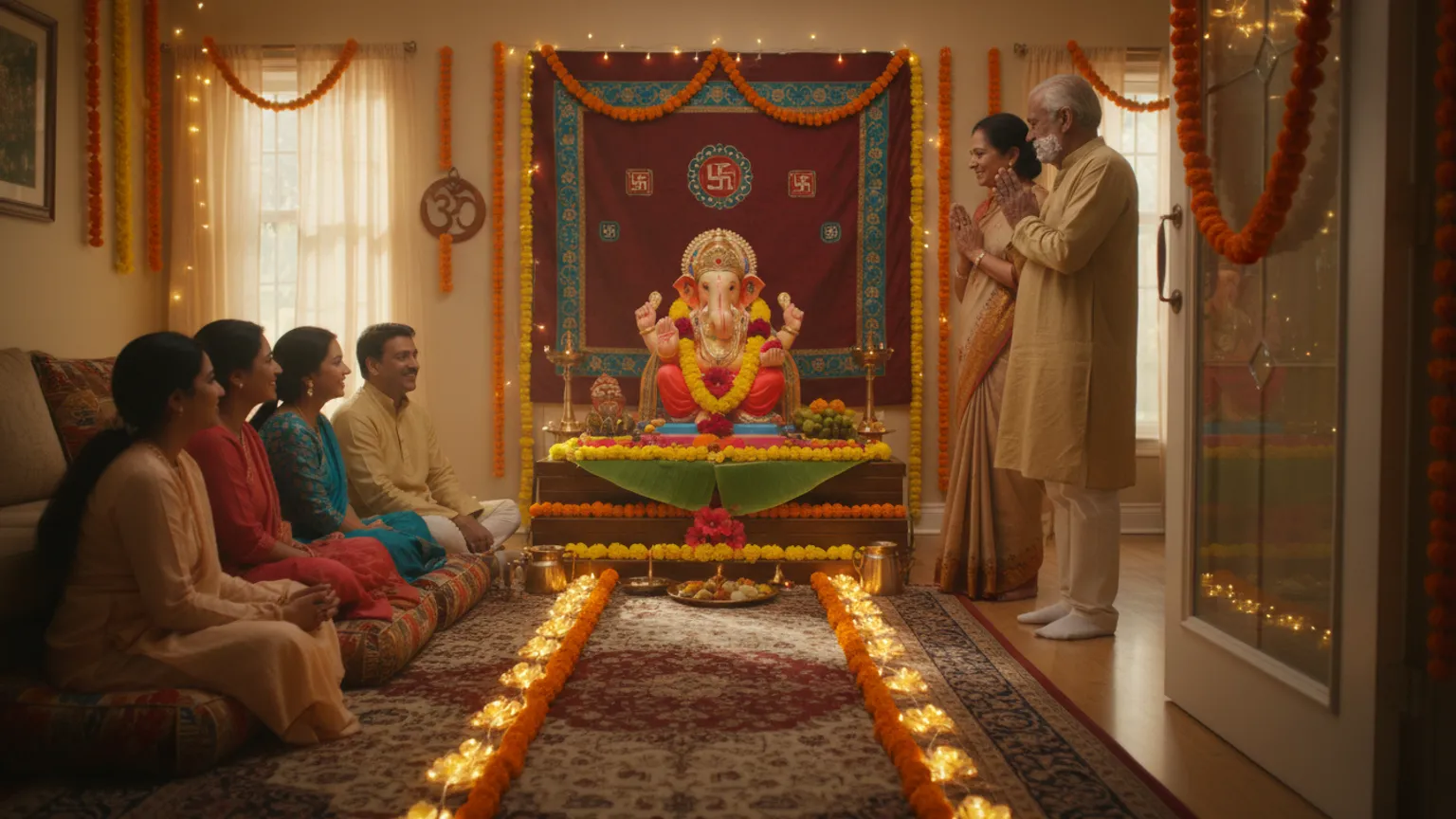
Ganpati decoration and seating: planning space for a stream of visitors
A home Ganpati is a foot-traffic problem, not a decoration one. A host's guide to placing the murti, three-zone seating, and keeping a walkway clear.
Navratri 2026 dates and the nine-day plan for a home host
Navratri 2026 runs 11 to 20 October: the full nine-day tithi calendar, how hosting differs by tradition, and where guest-list pressure actually lands.
Ganpati invitation message for WhatsApp: 50+ templates in Marathi, Hindi and English
Ready Ganpati invitation messages for every moment — sthapana, darshan, aarti, mahaprasad, Gauri and visarjan — in Marathi, Hindi and English, each written to get a countable reply instead of a thumbs-up.